A military campaign can turn on a single signal light, a frozen road, or a local ruler who decides that an army should pay a toll to cross his land. In Cast in Time, the struggle to reshape history is fought through bold plans and hard choices, where every advance depends on people, supplies, and ideas arriving in the right place at the right moment.
As preparations gather pace for an invasion toward the Ukraine, the narrator and his staff face a crisis close to home: Colonel Butler has died by suicide, leaving questions about his conduct, his debts, and the people he knew. The investigation may uncover more than a personal tragedy, and the new leadership team has no time to let uncertainty distract them from the enormous task ahead.
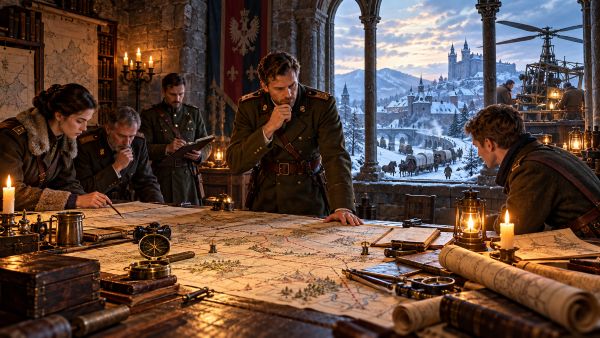
Their plans call for supply depots, repaired roads, warming stations, rail signals, and routes capable of moving an army through winter conditions. Even careful preparation, however, can run into the stubborn ambitions of a baron who believes he can block a national road.
The story’s military planning has the satisfying detail of a campaign taking shape on maps and in meeting rooms, but its scope reaches far beyond the battlefield. While the army prepares for the next move, agents build a quiet network of local contacts, listening in taverns and churches to learn who governs well, where resistance might arise, and what the people along the route need. Their work raises questions about loyalty and power that matter just as much as troop numbers: when an empire expands, who gets to decide what happens to the communities in its path?
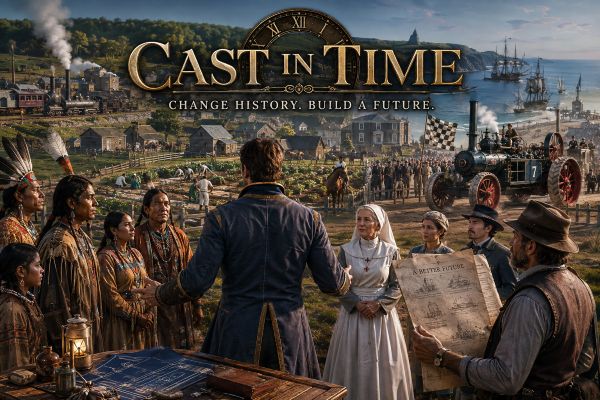
That question becomes especially urgent when a proposed highway through the Darién Gap promises to connect continents and open new routes for trade. The project could transform travel, but it also carries risks for the bison herds that sustain Indigenous peoples and for the spread of devastating animal disease. The narrator’s knowledge of the future offers a remarkable advantage, yet it cannot make every cost acceptable. When the future of a people and the future of a transportation network collide, progress demands more than engineering.
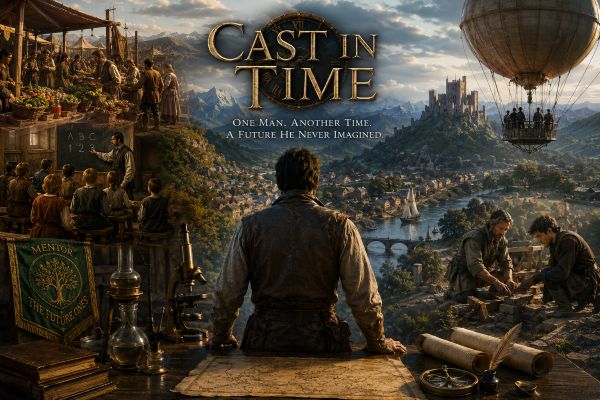
Across this changing world, modern ideas begin to take root in unexpected ways. Doctors reach the milestone of a successful kidney transplant after years of work on blood types, sterile surgery, anesthesia, and immune suppression. A new international prize is imagined to recognize discoveries and achievement. Meanwhile, engineers struggle to make helicopters reliable, learning that invention can be dangerous when a rotor fails or a gearbox gives way.
One test facility even needs a massive steel safety cage after a runaway rotor finds its way into a project manager’s kitchen. It is a memorable reminder that building the future can be as nerve-racking as it is inspiring.
The result is an alternate history with a sweeping sense of possibility and a grounded interest in what it takes to make change real. Grand strategies sit alongside the unglamorous work of repairing roads, feeding troops, recruiting informants, and persuading governments to fund the next project.
If you enjoy alternate history filled with military strategy, technological leaps, political maneuvering, and the occasional dry laugh amid serious business, Cast in Time offers a world you can settle into and keep exploring. Follow the series as one decision leads to another, and discover how far a determined vision can carry a society when the future arrives ahead of schedule.