What happens when someone carrying the knowledge of a modern world finds himself with the power to reshape an earlier one? In Cast in Time, the answer is far more complicated than simply introducing better weapons, faster machines, or new technology, because every advancement changes society, every decision creates consequences, and every encounter with another culture presents a choice between conquest and finding a better way forward.
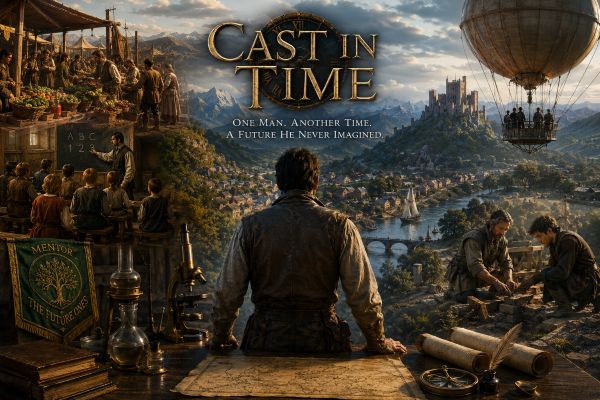
The world surrounding Duke Owen-nap is changing at a breathtaking pace as steam power, modern medicine, electricity, advanced firearms, factories, radio communication, and new methods of agriculture transform daily life, but Owen is discovering that building a civilization may be considerably easier than controlling what that civilization eventually becomes.
Trouble Never Arrives Alone
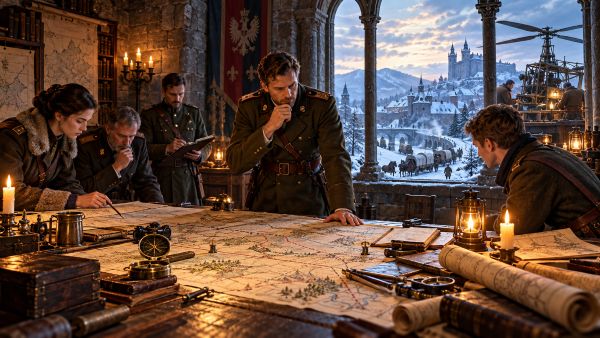
Owen has reached a point where the problems confronting him are no longer small ones, because he is responsible for territories, armies, families, settlements, and thousands of people whose lives can be changed by a single decision, whether that decision requires diplomacy, patience, careful planning, or overwhelming force.
A rebellion among thousands of newly formed Janissaries provides a brutal reminder that advanced weapons are dangerous regardless of who carries them. When five thousand armed men attempt to seize Toledo, Owen responds decisively, sending an unmistakable message to everyone who might consider following their example.
Yet military problems are only one part of his increasingly complicated life as family relationships continue developing around him, political responsibilities multiply, and ambitious projects that have waited years for attention can no longer be ignored.
One of the largest involves a people whose future Owen understands far better than they possibly could: the Iroquois.
An Expedition That Could Change History
Owen knows what history can bring when expanding European settlements collide with Native peoples, but he also possesses something almost no leader in this world has: knowledge of what could happen before it happens.
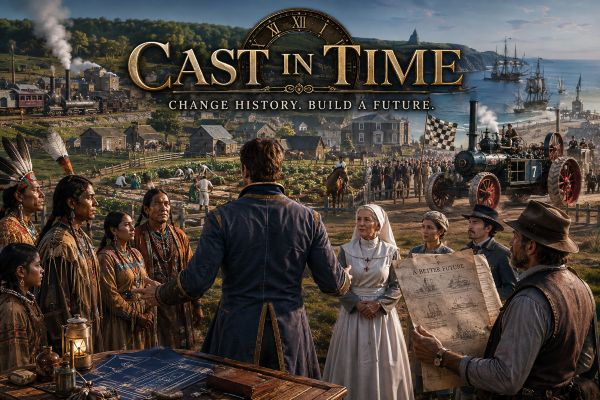
Rather than waiting for that collision, he decides to try something radically different by establishing a demonstration settlement on land rented from the Iroquois, where farmers can introduce improved agricultural methods, the Grey Ladies can provide medical care, livestock and herders can demonstrate animal husbandry, engineers and construction workers can build infrastructure, and armed guards can protect the settlement.
The objective isn’t simply to impress the Iroquois with technology, because Owen wants to demonstrate that farmland doesn’t have to be exhausted and abandoned. Crop rotation, livestock, permanent farms, and improved food storage could allow communities to remain in one place and survive years that might otherwise bring hunger.
Owen also understands that technology alone doesn’t change people, because even the most remarkable invention accomplishes little unless people can see how it will improve their lives and ultimately decide that they want the change it brings.
Five Hundred Acres and an Extraordinary Experiment
With Fox serving as intermediary, Owen’s expedition negotiates for five hundred acres along the coast, complete with a natural harbor, and what follows must look almost impossible to the people watching from nearby as chainsaws tear through trees, a powered sawmill turns timber into lumber, bulldozers clear land, roads appear, water and sewage lines disappear beneath the ground, and houses and barns begin rising where forest recently stood.
Then come wonders that are even more difficult to comprehend, including indoor plumbing, electric lights, modern medicine, vaccinations, and agricultural methods capable of keeping the same land productive generation after generation.
One Iroquois woman quickly recognizes the significance of what she is seeing, because if fields can remain fertile, her people would no longer have to abandon their homes when the soil failed, allowing permanent agriculture to create permanent communities with better shelters and a more reliable food supply.
Soon other influential women arrive to learn what Owen’s people are doing, and the experiment begins becoming something he hadn’t entirely planned as relationships form, languages are learned, one soldier asks permission to marry an Iroquois woman, more houses suddenly need to be built, and two cultures stop merely observing one another and begin becoming intertwined.
Welcome to Cornwall
Eventually an Iroquois delegation travels across the ocean to see Owen’s civilization firsthand, and their arrival in Cornwall offers some of the most entertaining cultural contrasts in Cast in Time as an engine-powered ship, a train, factories, stores, and an increasingly busy city expose the visitors to an entirely different way of life.
The women soon discover the marketplace, but although the Iroquois visitors arrive without Cornish coins, they possess beautifully crafted wampumpeag belts that can be traded. Owen helps establish an exchange value and purchases the belts at a premium, suddenly giving the visitors something every traveler understands perfectly well, shopping money.
It doesn’t take long before Cornish merchants discover that their new customers are anything but naïve, as prices are negotiated, useful goods are purchased, and the discovery of a clothing store results in the men being wisely sent elsewhere while the women conduct some serious shopping.
It’s exactly the kind of humor that makes Cast in Time so much fun, because even while enormous historical changes are taking place, human nature remains wonderfully familiar.
You Men Have Turned Into Women!
The greatest obstacle Owen faces isn’t machinery, transportation, or communication, but pride, because for generations the Iroquois men have been hunters and the idea of farming or tending livestock doesn’t fit easily into their understanding of a man’s role.
Owen’s people therefore approach the problem in a language the hunters understand, beginning with a wild boar hunt before showing them cattle and sheep ranches that demonstrate how raising livestock can provide a reliable supply of meat without requiring them to abandon the excitement and tradition of hunting.
Resistance remains, however, and when one warrior suggests that farming and livestock are women’s work, Owen’s people are ready with a demonstration designed specifically to challenge that assumption.
A supposedly ordinary farmer challenges the tribe’s best fighter, but unfortunately for the confident warrior, this particular “farmer” happens to be one of Owen’s finest hand-to-hand combatants, and the resulting contest quickly changes some opinions about whether men who work farms have somehow become less manly.
Suddenly tending livestock doesn’t seem quite so beneath them.
It’s classic Cast in Time, combining a serious cultural problem with careful planning, modern knowledge, a little manipulation, and enough humor to make the lesson unforgettable.
Then They Discover Steam Tractor Racing
Introducing advanced technology to an earlier civilization produces unexpected consequences, and sometimes those consequences are so wonderfully strange that even Owen couldn’t have anticipated them.
The Iroquois men encounter enormous steam tractors working the fields and are understandably intimidated until a fourteen-year-old climbs down from one of the machines and teaches them how to operate it, but what begins as an agricultural demonstration takes an entirely different turn when someone mentions that Cornwall also races steam tractors.
Special machines have been modified for speed, racetracks draw enthusiastic crowds, night racing has become popular, food vendors have appeared, drivers sell merchandise, and young couples attend races on dates, creating something that sounds suspiciously like a modern motorsports culture powered by steam.
There are even extensive safety regulations, although those arrived only after racers began doing dangerously creative things with steam boilers, proving once again that Owen may possess knowledge from a more advanced age, but once people get their hands on technology, they inevitably develop their own ideas about what to do with it.
Building More Than Machines
Beneath the humor and adventure lies one of the most compelling ideas running through Cast in Time: how do you actually build a modern civilization when almost every institution and system people take for granted still has to be created?
It isn’t enough to invent a machine because a functioning society needs property laws, banks, loans, taxation, infrastructure, hospitals, schools, agriculture, transportation, medicine, communication, and countless other systems most people rarely think about until they are forced to construct them from the ground up.
Owen understands how these pieces fit together because he comes from a world where they already existed, but explaining those concepts to someone encountering them for the first time is another matter entirely.
A visit to a local farm becomes a lesson in property ownership, a trip to the land registry demonstrates how ownership is recorded, a visit to the bank introduces loans and mortgages, and the increasing value of improved farmland demonstrates how wealth can be created.
Then comes taxation, proving that even centuries away from the modern world, one truth apparently survives perfectly intact: nobody particularly enjoys paying taxes.
Roads, schools, hospitals, and public improvements still have to come from somewhere, however, and Owen isn’t merely introducing inventions to this world; he is constructing institutions capable of supporting everything those inventions make possible.
What Happens When You Know the Future?
That question sits at the heart of what makes Cast in Time so intriguing, because knowing history gives Owen enormous advantages without making his choices easy.
He must continually decide which technologies should be introduced, who should be trusted with advanced weapons, how quickly society should be allowed to change, and what should happen when traditions that have existed for generations collide with opportunities that could completely transform people’s lives.
There is also a larger and increasingly difficult question hanging over everything Owen does: can knowledge of history prevent its tragedies, or does changing history simply create entirely new problems that no one could have predicted?
Owen can introduce better farming, modern medicine, industrial production, transportation, communications, and entirely new economic ideas while preparing people for threats they don’t yet understand, but he cannot completely control what happens afterward because every advancement sends another ripple through history.
History Isn’t Repeating Itself Anymore
The farther Owen’s civilization advances, the more unpredictable his world becomes as cultures that once might have collided meet under completely different circumstances, technologies appear centuries ahead of schedule, new cities form, trade expands, social customs evolve, military power shifts, and even entertainment begins developing in ways no history book ever recorded.
History is no longer following the path Owen remembers, which means his greatest advantage, knowing what originally happened, may become less useful with every successful change he makes.
That’s where Cast in Time becomes much more than a time-travel adventure, because it explores what could happen if someone were given the opportunity to rebuild history using knowledge that doesn’t belong there yet, with some ideas working beautifully while others produce unintended consequences, create hilarious situations, or introduce entirely new dangers that no history book could possibly have warned Owen about.
Enter the World of Cast in Time
If you enjoy alternate history, time travel, civilization building, military strategy, technological innovation, political maneuvering, and watching modern ideas collide with an earlier world, Cast in Time offers a story capable of constantly expanding in surprising directions.
There are battles and political struggles alongside farms, factories, hospitals, marketplaces, relationships, inventions, cultural clashes, and wonderfully unexpected developments such as steam-powered racing, creating a world where changing history isn’t simply about winning wars but about transforming how ordinary people live.
At the center of everything is a man facing an extraordinary challenge: if you possessed the knowledge to change history, what would you change first, how far would you go, and how long would it be before the history you were changing began to change you?
Step into Cast in Time and discover a past that was never supposed to exist.