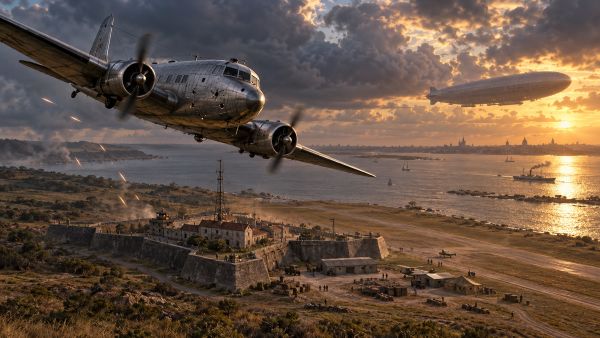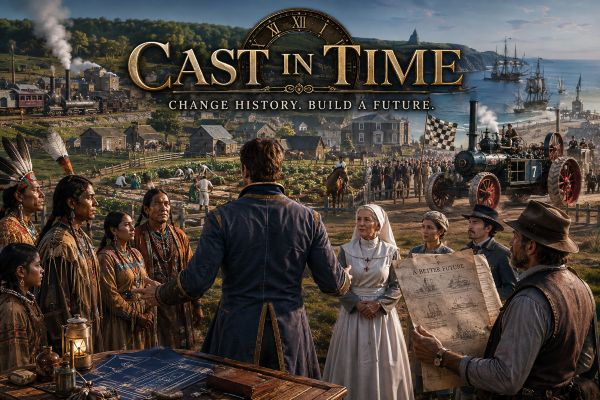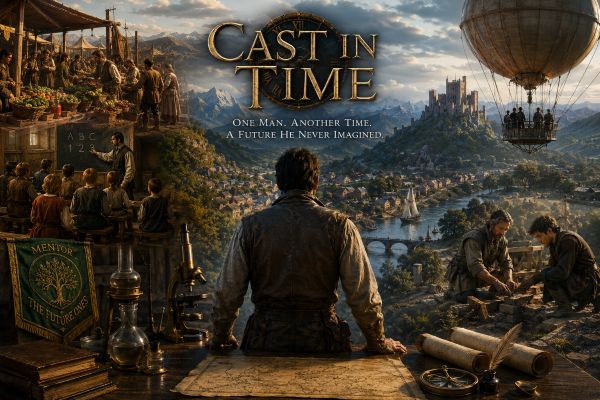
What happens when a man armed with knowledge from the future attempts to reshape the medieval world?
In Cast in Time Book 8, conquest is not simply about armies marching across borders. It is about reforming laws, reshaping culture, securing resources, inspiring loyalty, and managing the fragile illusion of control. As the empire expands, the cracks beneath its foundation begin to show.
Reforming a World That Doesn’t Want to Change
When Poland joins the Owen-nap Archdukedom, the transition is far more complicated than a political agreement. It becomes a collision between centuries-old traditions and sweeping reform. Polish nobles have long ruled as absolute authorities within their lands, serving as judge, jury, and executioner. Now they must submit to a centralized judiciary. Their individual laws must align with a broader legal structure, and their unchecked power must give way to accountability.
One decree in particular sends shockwaves through the convention of nobles. There will be no more serfs bound to the land. To many nobles, this decision threatens economic chaos and undermines their authority. To James Foster, it is a moral necessity. His chief justice tells them that if they wish to keep their workers, they must treat them decently. In a feudal world, that concept alone feels revolutionary. This is not merely the expansion of territory. It is social transformation on a continental scale.
Rockets, Railroads, and the Rewriting of Civilization
While tensions simmer in Poland, the Archduke travels to Florida under the official pretense of inspecting the space program. The reality is that he needs distance from the political storm. Even so, progress continues at a breathtaking pace. Rockets painted with the flags of every province rise into the sky as symbols of unity and technological advancement far ahead of their time. Railroads stretch toward the eastern frontier, and infrastructure becomes the backbone of empire.
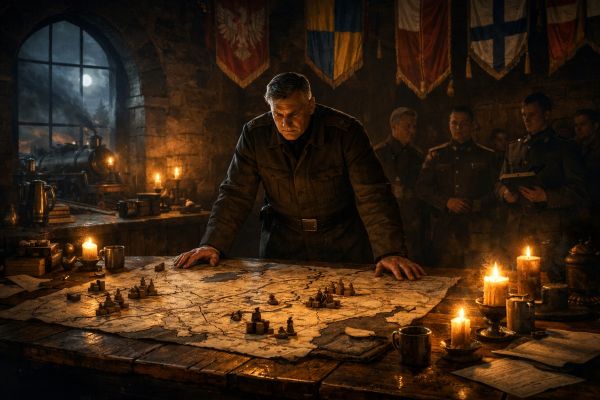
Yet expansion requires more than steel and steam. It demands understanding. When James casually suggests sweeping motorized divisions across what he assumes are open plains in Eastern Europe, his generals quietly correct him. The Carpathian Mountains dominate much of the region. The Baltic states are a complex mix of forests, hills, and untapped mineral wealth. Crimea’s vast wheat fields feed Constantinople, and beneath the soil lie iron, manganese, titanium, coal, oil shale, amber, sulfur, and other resources capable of fueling an industrial superpower centuries early.
For the first time, James openly acknowledges that he does not know everything. To officers who have come to see him as nearly infallible, this admission is unsettling. To readers, it is the moment the legend becomes unmistakably human.
Intelligence, Intrigue, and the Fear of Betrayal
Before launching campaigns against the Kievan Rus and the Baltic territories, James demands comprehensive intelligence briefings covering geography, culture, religion, and economics. He learns how Norse pagan traditions have blended with emerging Christianity, how Yule traditions evolved into elements of Christmas, and how trade agreements in the region are so frequently broken that war is almost a constant state.
Recognizing the risks of rapid expansion, he begins restructuring both intelligence and military command. Independent planning groups are formed. Internal investigations are established within the CIA to guard against corruption or treason. Counterintelligence oversight becomes a priority. Military commanders are given clearer missions and greater responsibility in planning operations.
James understands a dangerous truth. The larger the empire grows, the greater the possibility of internal revolt. As he ages, he becomes more aware of his own limitations and the perception of weakness that could invite instability.
The Logistics Meeting That Changed Everything
One of the most compelling moments unfolds during what should have been an ordinary logistics meeting. A colonel presents his stockpiling plan for the coming invasion of the Rus. He praises his own efforts and methodically reads through slide after slide, confident that his promotion is assured.
Then a young captain asks a simple but critical question. How will traffic be controlled along single-lane highways and railways once the invasion begins? The colonel dismisses him for daring to question a superior officer.
From the back of the room, a calm voice intervenes. James Foster, Archduke and General of the Armies, challenges the colonel directly. Unrecognized without visible rank insignia, the colonel initially orders him to leave. The revelation of James’s identity changes the room instantly.
What follows is a powerful display of leadership. Weak planning is exposed. Nepotism is uncovered. Promotions are made based on merit. Responsibility is reassigned. By the end of the chapter, the disgraced colonel is found dead in his quarters, an event officially ruled a suicide but shadowed by unanswered questions.
In Cast in Time, power does not simply build empires. It tests loyalties and destroys those who cannot bear its weight.
Why Readers Can’t Put This Series Down
Cast in Time is more than alternate history. It is an intricate blend of military strategy, political reform, industrial acceleration, intelligence maneuvering, cultural transformation, and deeply personal leadership struggles.
James Foster is not a flawless hero. He is aging, reflective, and increasingly aware of the pressures surrounding him. He is forced to evolve from being the singular mind behind every decision to becoming the architect of systems that can function without him.
As the empire grows stronger, its foundation becomes more delicate. The world is being rebuilt, but every reform, every campaign, and every decision carries consequences.
If you enjoy strategic brilliance under pressure, political maneuvering layered with moral complexity, bold historical what if scenarios, and leaders tested not only by enemies but by their own limitations, then Cast in Time belongs on your reading list.
The future has been inserted into the past. The question is whether the world can survive the transformation.